

Entry Doors vs Internal Timber Doors – Which One Do You Need?

Not all timber doors are built for the same purpose – and choosing the right type for each location in your home is one of the most important decisions you’ll make during a renovation or new build.
At Summit Doors, we supply both premium engineered entry doors and solid-core internal timber doors to Melbourne homeowners, builders, and developers. This guide explains the key differences between the two – and how to select the right product for your specific requirements.
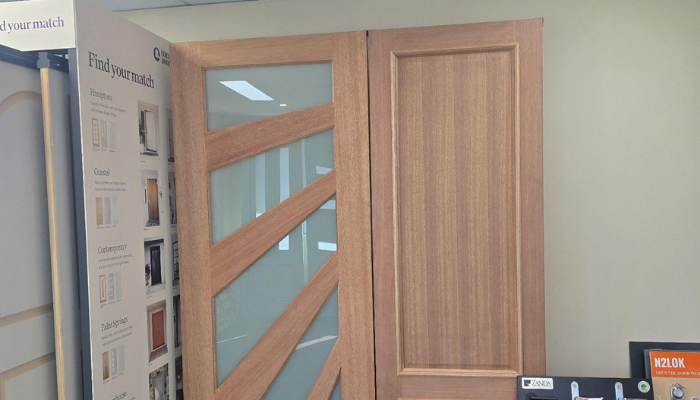
Entry Doors vs Internal Doors – Understanding the Difference
The most fundamental distinction between an entry door and an internal door lies in the conditions each must withstand.
Entry doors face Melbourne’s full weather spectrum – UV exposure, driving rain, coastal humidity, and temperature swings that can cause poorly constructed doors to swell, warp, or fail. Internal doors, by contrast, operate in stable, climate-controlled environments where structural demands are different.
Selecting the wrong door type for a given location, particularly using an internal door in an external position can result in rapid deterioration, failed weather seals, and compromised security.
External Entry Doors That Built for Melbourne’s Climate
Your front door creates the first impression of your home while providing essential protection against weather, noise, and intrusion. In Melbourne’s famously unpredictable climate (four seasons in one day) an entry door must perform consistently, year after year.
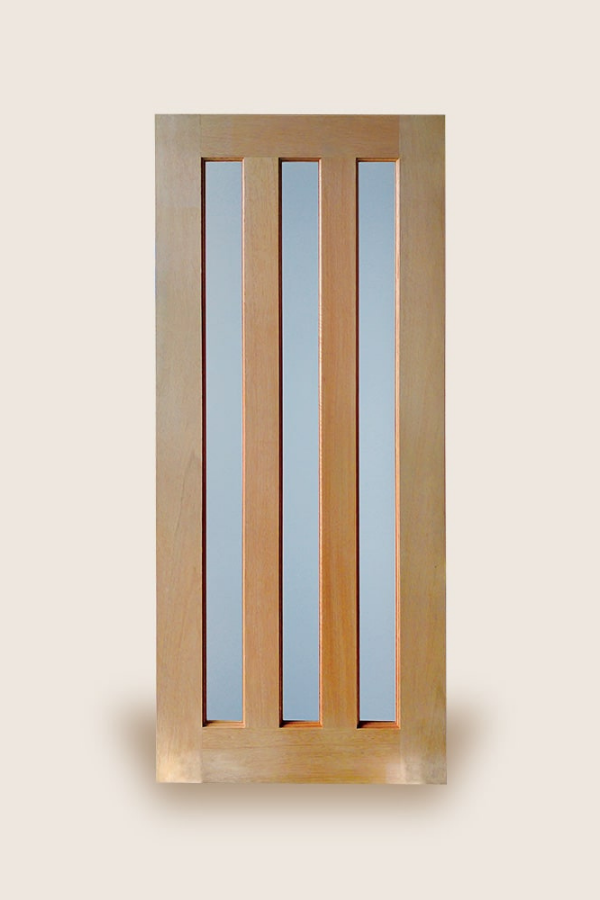
Why Engineered Construction Matters for Entry Doors?
Traditional solid timber entry doors are susceptible to seasonal movement as temperature and humidity fluctuate. Over time, this movement can cause a door to stick in its frame, allow drafts, and prevent locking systems from engaging correctly.
Summit Doors’ engineered entry doors use a cross-laminated composite core that resists this movement. The door remains square within the frame throughout the year, allowing weather seals and locking systems to continue performing effectively for decades.
Key Features of a Quality Entry Door
- Dimensional stability: engineered core resists warping, swelling, and shrinkage
- Weather seal compatibility: stays square for effective draft and weather exclusion
- Security performance: maintains correct alignment for locks and deadbolts
- UV and weather resistance: protected with exterior-grade coatings
- Glazing options: clear or frosted glass panels for light and privacy
Internal Timber Doors Bring Premium Feel for Every Room
Inside the home, the right internal door transforms the feel of a space, adding acoustic privacy, visual cohesion, and a sense of quality that hollow-core alternatives simply cannot match.
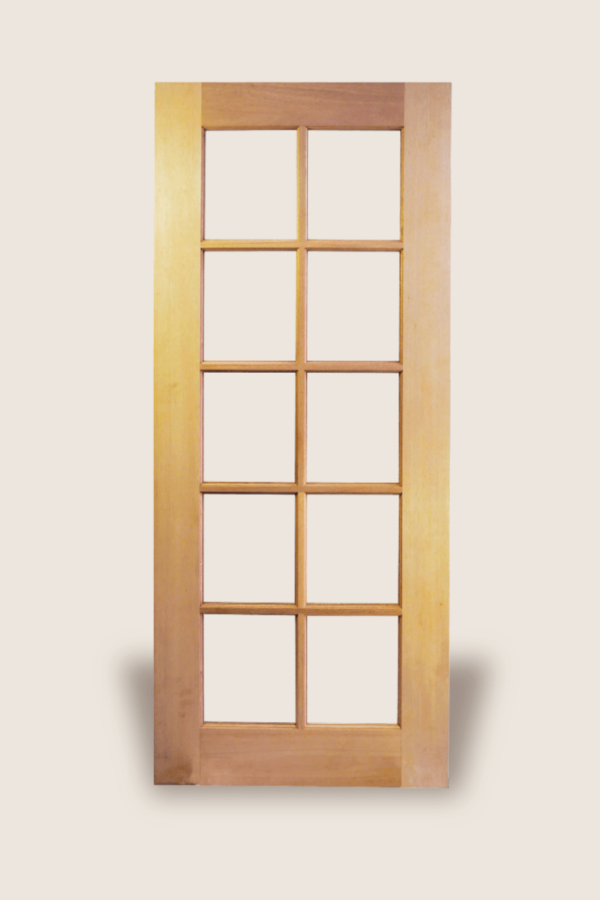
Solid-Core Engineered vs Hollow-Core Internal Doors
The majority of residential internal doors sold through volume builders are hollow-core – a lightweight frame with a cardboard or foam honeycomb interior. While cost-effective, hollow-core doors offer minimal acoustic insulation and a noticeably lower-quality feel.
Summit Doors’ internal engineered timber doors use a solid-core construction that delivers a substantially more premium experience – a heavier, more satisfying feel, significantly better sound attenuation between rooms, and a product designed to perform for decades rather than years.
Where Internal Timber Doors Make the Most Difference
- Bedrooms: superior acoustic privacy for rest and relaxation
- Home offices: reduced noise transfer for concentration and video calls
- Home theatre rooms: minimises sound bleed between spaces
- Ensuites and bathrooms: moisture-resistant primed finish
- Multi-generational homes: acoustic separation between living areas
Entry Door vs Internal Door – Side-by-Side Comparison
| Feature | Entry Door | Internal Door |
| Weather resistance | Essential – exposed to full weather | Not required – interior use only |
| Core construction | Engineered composite – maximum stability | Solid-core engineered or honeycomb |
| Acoustic performance | Good – supports weather seal integrity | Excellent – solid core blocks noise |
| Size options | Up to 1200mm wide, 2340mm tall | 420mm–820mm wide, up to 2340mm |
| Glazing options | Clear, frosted, translucent available | Optional – varies by model |
| Coating required | Exterior-grade UV paint or stain | Interior paint — primed ready |
| Security hardware | Deadbolts, multi-point locks | Passage, privacy, bedroom sets |
| Typical lifespan | 20–30+ years with correct maintenance | Decades with normal interior care |
Why Melbourne Builders and Homeowners Choose Summit Doors?
Summit Doors supplies premium engineered timber doors to homeowners, builders, carpenters, and developers throughout Melbourne and regional Victoria. Since 2012, we’ve built our reputation on product quality, expert advice, and a commitment to helping every project stay on schedule.
What Sets Summit Doors Apart
- Fast order turnaround: we pride ourselves on processing orders quickly, helping builders and trades keep their projects moving.
- Extensive stock range: popular designs and sizes held in our Heidelberg West warehouse for immediate dispatch.
- Premium engineered construction: all doors built to perform in Melbourne’s climate – not just look good on delivery day.
- Competitive wholesale and retail pricing: dedicated pricing for both trade accounts and retail customers.
Frequently Asked Questions
Q: Can engineered timber doors be trimmed?
Yes. Engineered timber doors include solid timber stiles and rails that allow qualified installers to make minor adjustments during installation where necessary.
Q: Do engineered timber doors look like real wood?
Absolutely. The visible surface is genuine hardwood veneer, delivering authentic timber grain, texture, and warmth that is virtually indistinguishable from solid timber.
Q: How much maintenance do engineered timber doors require?
Significantly less than traditional solid timber. External entry doors should be recoated with a quality exterior finish every 3–5 years. Internal doors require only standard interior painting with no structural maintenance.
Q: Can I use an internal door as an entry door?
No. Internal doors are not built to withstand external weather conditions. Using an internal door in an external position will cause rapid deterioration of the door and its weather seals. Always specify an entry-rated door for external positions.